Far away, in the misty mountains, among the clouds circling the vast plains, where eagles and vultures circle, there is a treasure trove, if you seek to find it out. The snow drifts on the lofty peaks, and chilly winds blow, the mountain lions roam and the silence is all around. But sometimes, it is broken, when the wind picks up speed, and then rushing like the gushing waters in the stream below, they scream and rattle like keys in an old rusty metal box. The girls come out and play among the snow, and look about for scraps to make a snowman. And if you look closely they will have completed making one. Sometimes, the night is pierced by the song of a woman, half in despair, half in desperation, and her long, soulful notes carry through the night, and it seems reach up to the very stars that twinkle in the mountain sky. She is remembering something, and yearning for something lost, something not yet forgotten, something which was hers. That is the moment when the silence is truly broken. When the night is at it's darkest. When the moon is at it's highest. When the lions are at their hungriest. And the eagles and vultures at their most restless. The woman comes out and sings, her hair flying about her in the chilly wind, her voice scratching like a rough sandstone. She climbs and climbs the high mountains, for she alone knows the place of the treasure trove. That is where she hid something. Something precious, something old, something she cannot yet forget. Every night, she sings, and seeks out the treasure on the snowy mountain, and every night, clutching it to her chest, near the empty space within, she climbs back down and cries herself to sleep. Only to wake up the next day, and find herself in the same dream, and go in search of her treasure at night, and sing her heart out.
Wednesday, January 26, 2011

Tuesday, January 18, 2011
Jungle Music
"New Orleans was a ramshackle whirligig of a town, part French, part Negro, part Southern dude, part Northern carpetbagger, part Mexican, part Spanish, and part Indian. It was also a trading center and port, sprawled along the Mississippi on the Gulf of Mexico. No other town in the United States could boast such a cosmopolitan mix, or promise such an exciting welcome. It was noisy, dirty, hot, and smelly. And in this place, according to various Northern newspaper reports, was first heard a sound called variously "jass", "jasz", and "jazz."
Nowadays, the word "jazz" has little meaning. So many different styles of music - from Louis Armstrong to the Modern Jazz Quartet - have been labeled jazz that any sense of difinition has been lost. Jass now means anything that anybody chooses to call jazz - the music bellowed out today on the Bourbon Street, for exaple, is no more jazz than the French Quartet was Storyville. It sounds vaguely similar to "authentic" New Orleans jazz, but is too loud and too fast. The loudness, at least, may not be the fault of the musicians. They are often required by the bar owners to play more lustily than the outfit next door because the loudest music attracts the most customers in off the street.
Many of these musicians learned their jazz from the first recorded group, the Original Dixieland Jazz Band. But the compositions played by the Original Dixieland Jazz Band were too long for the three-minute wax records of their day, so to accommodate the technical requirements of an infact recording industry, the band simply speeded up their muisc to make it fit. In live performances, as the band itself admitted, such speed would have been unthinkable.
Jazz was primarily a performing art; it has never lent itself easily wither to arrangement or to sheet music. The determination to write down melodies and call them jazz came soon enough, but this was not in the spirit of the original music..."
"All music is entitled to the dignity of definition and jazz is no exception. As it was heard in New Orleans after World War I, it possessed a definite and limited form. It consisted of any melody played by two or more musical voices, improvisng collectively in two/four or four/four time, that was syncopated. Such a definition (or any definition for that matter) will not satisfy many people, aficionados of the extended, exploratory solo do not permit their heroes to be shackled by form. But before virtuosi boosted their images at the expense of cooperative musicanship, the style was not so loose. The word "jass" may indeed have been Negro slang suggesting copulation, or merely an onomatopoeic reference to the sound of a New Orleans paddle steamer. But its meaning was clearly understood by all its early practitioners, as was its instrumentation and proper place in society. Without structure or purpose, it would have been anathema to anyone striving to attain respectability. "
From 'All you need is love', The story of popular music, by Tony Palmer, 1976.
.
Friday, December 3, 2010
The story of the pencil
I thought that from time to time, I might share a little story or two with you, something to reflect on and think about. Today I bring to you a little story from Paulo Coelho's book 'Like the Flowing River', which is basically his collection of articles, stories and anecdotes that he has published or heard over time as his career as a writer.
Today the story that I am going to share with you is called 'The story of the pencil', and is one of my favourites.
'A boy was watching his grandmother write a letter. At one point, he asked:
‘Are you writing a story about what we’ve done? Is it a story about me?’
His grandmother stopped writing her letter and said to her grandson:
‘I am writing about you, actually, but more important than the words is the pencil I’m using. I hope you will be like this pencil when you grow up.’
Intrigued, the boy looked at the pencil. It didn’t seem very special.
‘But it’s just like any other pencil I’ve ever seen!’
‘That depends on how you look at things. It has five qualities which, if you manage to hang on to them, will make you a person who is always at peace with the world.
‘First quality: you are capable of great things, but you must never forget that there is a hand guiding your steps. We call that hand God, and He always guides us according to His will.
‘Second quality: now and then, I have to stop writing and use a sharpener. That makes the pencil suffer a little, but afterwards, he’s much sharper. So you, too, must learn to bear certain pains and sorrows, because they will make you a better person.
‘Third quality: the pencil always allows us to use an eraser to rub out any mistakes. This means that correcting something we did is not necessarily a bad thing, it helps to keep us on the road to justice.
‘Fourth quality, what really matters in a pencil is not its wooden exterior, but the graphite inside. So always pay attention to what is happening inside you.
‘Finally the pencil’s fifth quality: it always leaves a mark. In just the same way, you should know that everything you do in life will leave a mark, so try to be conscious of that in your every action.’
Sunday, November 28, 2010
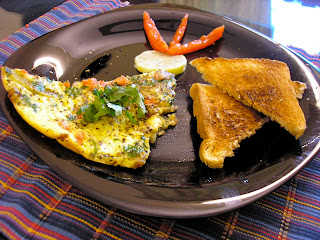
Spanish omelette
I once saw this recipe on BBC Food, but added a bit more here and there to improvise it a little further. Totally good if you want to have a relaxing, leisurely breakfast in the morning. And not a hassle to make either.

4 eggs
2 small potatoes
2 green chillies
1 small onion
2 cloves of garlic
salt and pepper to taste
1 tomatoe
a small bunch of corriander leaves
dry basil
2 tablespoons olive oil for frying
one lime
toasted brown or bran bread
Beat the eggs together. Heat the oil in a frying pan and peel and slice your potatoes thinly. Fry them on high heat until almost done. Cover the pan. Chop the onion, chillies and garlic roughly and add to the potatoes. Stir and cover again. Add the eggs now and turn the heat on medium. Sprinkle with salt and freshly ground pepper. Add some of the chopped corriander and basil on top and the tomatoes as well. Cover. The eggs should be done when the top side looks set but still soft enough. Remove from flame. Cut into triangular pieces, sprinkle some lime juice and serve with toasted bread of your choice. Garnish with chopped corriander.

2 small potatoes
2 green chillies
1 small onion
2 cloves of garlic
salt and pepper to taste
1 tomatoe
a small bunch of corriander leaves
dry basil
2 tablespoons olive oil for frying
one lime
toasted brown or bran bread
Beat the eggs together. Heat the oil in a frying pan and peel and slice your potatoes thinly. Fry them on high heat until almost done. Cover the pan. Chop the onion, chillies and garlic roughly and add to the potatoes. Stir and cover again. Add the eggs now and turn the heat on medium. Sprinkle with salt and freshly ground pepper. Add some of the chopped corriander and basil on top and the tomatoes as well. Cover. The eggs should be done when the top side looks set but still soft enough. Remove from flame. Cut into triangular pieces, sprinkle some lime juice and serve with toasted bread of your choice. Garnish with chopped corriander.

Thursday, November 18, 2010
I see your true colours...
Eid would be incomplete without mehendi and its intricate designs and patterns to adorn our hands, its sweet heady scent, bangles and new clothes, sweet things to eat and family and friends to meet! And of course, lots of meat! :)


Season's greetings and Eid Mubarak!
I can think of no better way to welcome winter than through this simple yet delicious apple crumble with whipped cream to mark the holidays and get in the festive spirit!


Saturday, November 13, 2010
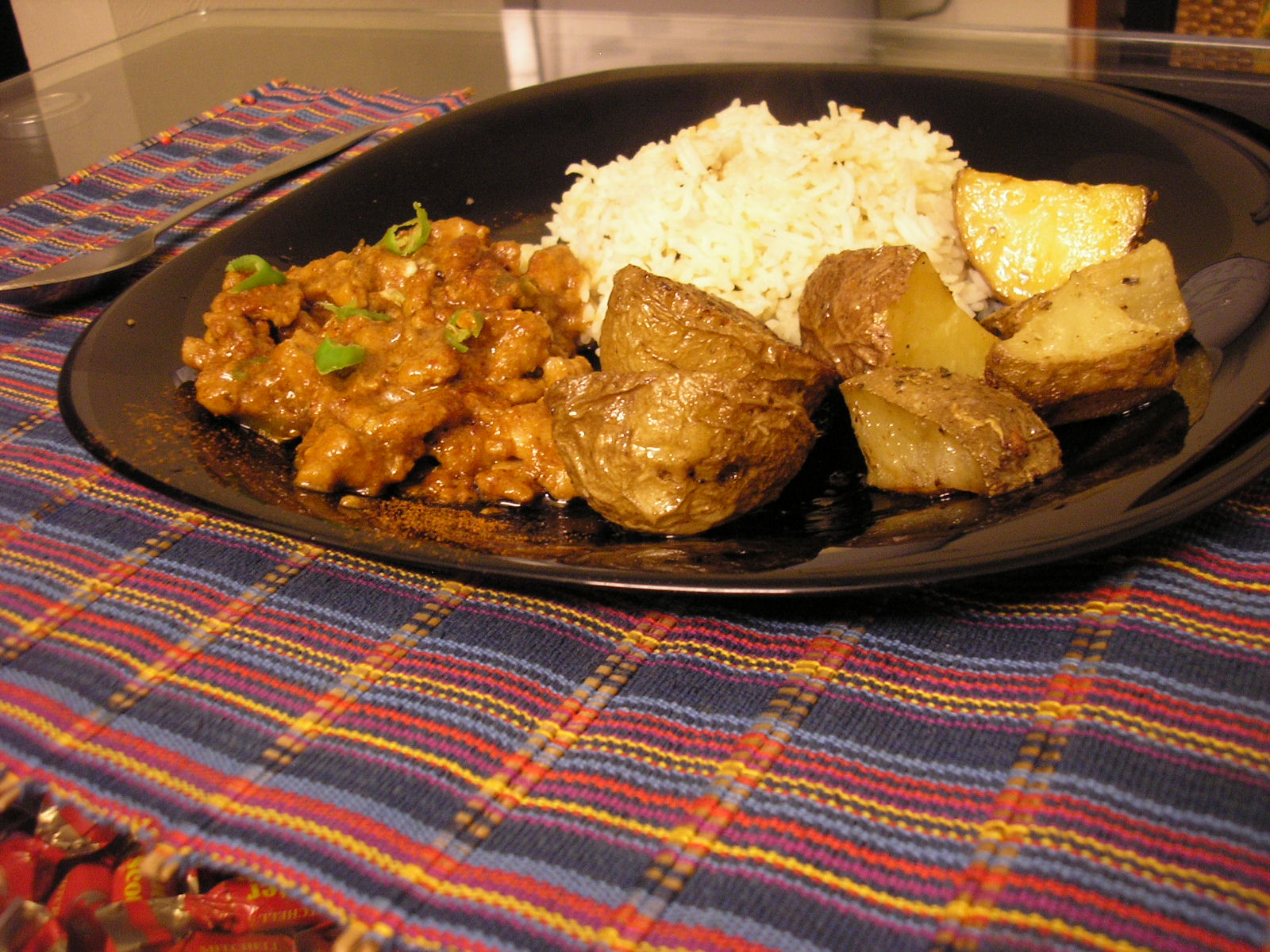
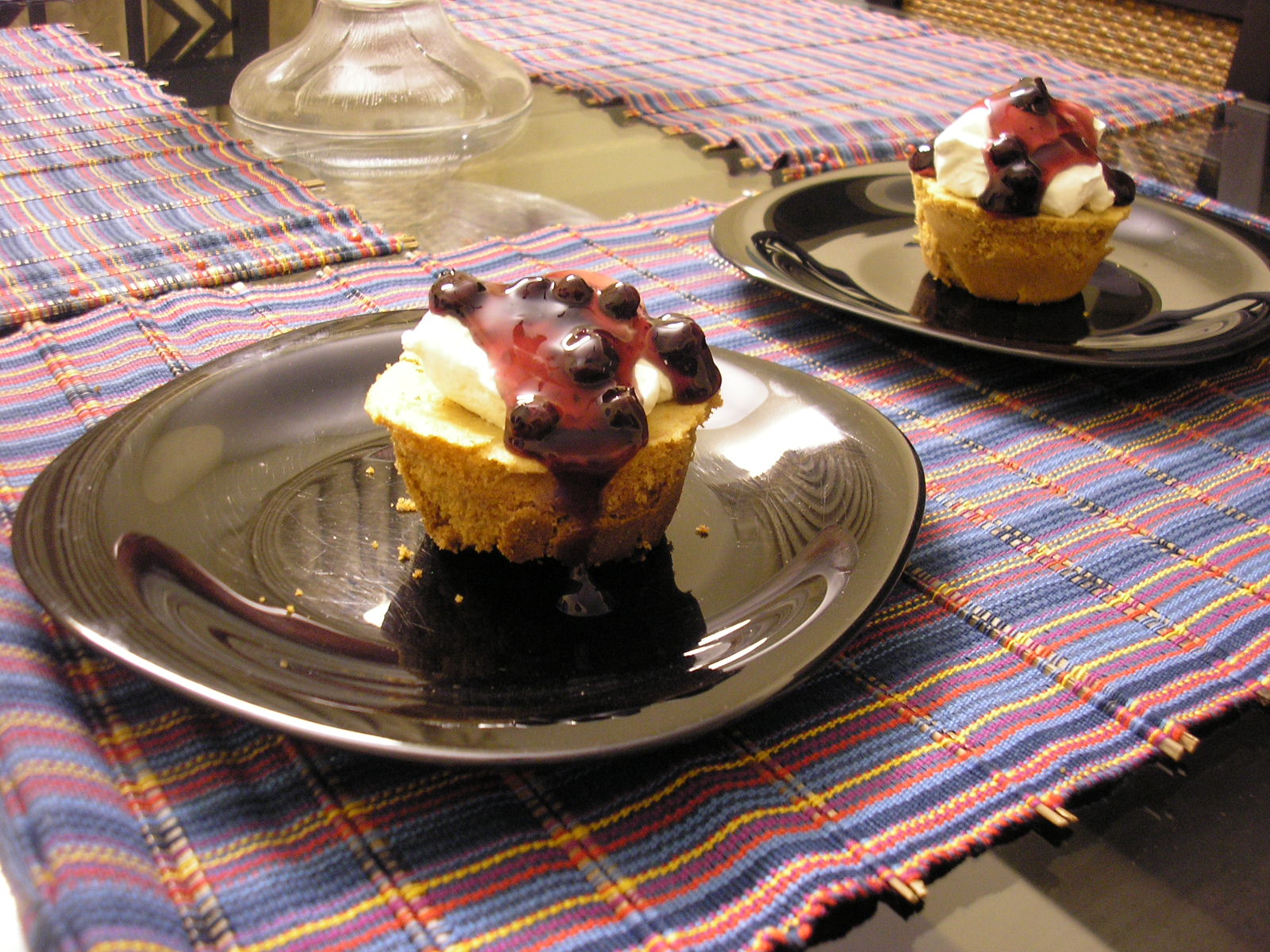
Okay! So much to write about, where to start? Well, recently I’ve had quite an inspiration, no epiphany rather, and was presented with a lot of ideas in my head to cook something up and create something interesting. I’ll tell you one thing though, it’s amazing how much you can get accomplished when you have loads of free time on your hands. So, as it goes, I’ve made my ginger bread, vanilla cupcakes, chicken and mushroom soup with garlic bread, in the last few days and for dinner last night, I made chicken chile dry with honey and fragrant basil rice, with some freshly baked roast potatoes. I love the combination of chili and honey with the chicken, it’s a hit in the palette!
And here are the photos that go with it!
Chicken Chilli with honey and mustard, with baked oreganao garlic butter potatoes and fragrant basil rice.



Ginger bread with whipped cream frosting




Subscribe to:
Posts (Atom)